Casey Wagner · 10 October 2026
How Polish Academic Networks Are Shaping New Light-Bending Instruments for Wildlife Habitat Surveys
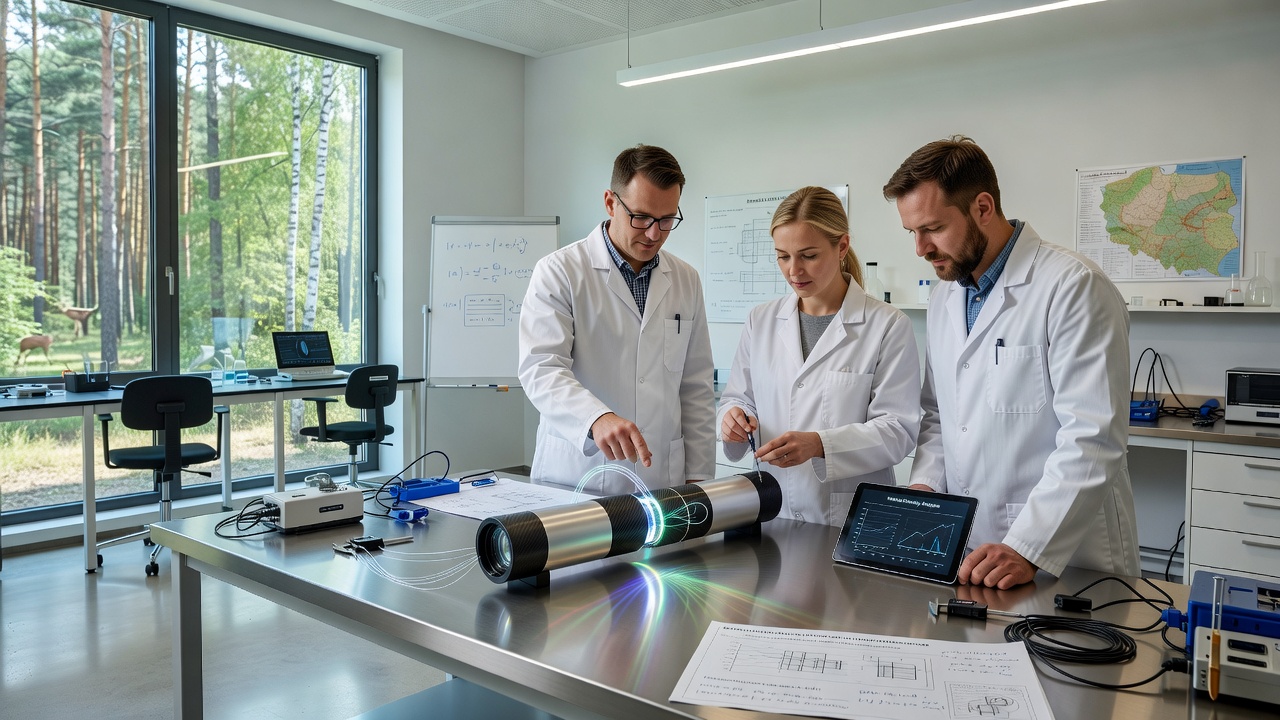
Polish academic networks have expanded their focus on photonics applications that support non-invasive wildlife habitat surveys, and several universities now coordinate efforts to refine instruments capable of bending and directing light for precise environmental data collection. These instruments rely on advanced prism and lens configurations that allow researchers to capture detailed readings across dense vegetation without disturbing animal populations, while the underlying technology draws from ongoing work at institutions including the Warsaw University of Technology and the AGH University of Krakow.
Collaborative platforms link optics laboratories with ecology departments, and this integration has produced prototypes that adjust light paths to map habitat features at multiple scales. Data gathered through these systems supports population tracking and vegetation analysis, and researchers note that calibration techniques originally developed for laboratory use now translate directly into field deployments across Polish national parks.
Network Structure and Research Coordination
Academic networks in Poland operate through shared facilities that connect photonics groups with remote-sensing teams, and these arrangements allow rapid iteration on instrument designs. Participants exchange calibration protocols and test results through centralized databases, which reduces duplication and accelerates progress on light-bending components suited to variable outdoor conditions. In October 2026 several participating labs plan joint field trials that will evaluate new prism arrays under autumn canopy conditions, and the schedule aligns with seasonal migration patterns observed in monitored bird and mammal species.
Funding streams from national research programs and European Union initiatives support equipment purchases and personnel exchanges, while project timelines incorporate milestones tied to instrument accuracy benchmarks. Teams measure performance through controlled comparisons against traditional survey methods, and results feed into iterative improvements that refine beam steering and signal collection.
Technical Developments in Light-Bending Components
Engineers have adapted multi-element prism systems to redirect specific wavelengths toward sensors positioned at a distance from the target area, and this approach minimizes physical intrusion into sensitive habitats. Materials selected for these components resist temperature fluctuations and humidity changes common in forested regions, while coatings reduce unwanted reflections that could interfere with low-light readings. Laboratory tests demonstrate that adjusted prism angles improve resolution of understory features by measurable margins compared with earlier single-element designs.
Integration with drone-mounted platforms and fixed sensor towers extends the reach of these instruments, and software models convert raw optical data into habitat maps that highlight vegetation density and water sources. Observers note that the same calibration routines used for air-quality monitoring in urban settings have transferred successfully to wildlife applications, yielding consistent performance across different terrain types.
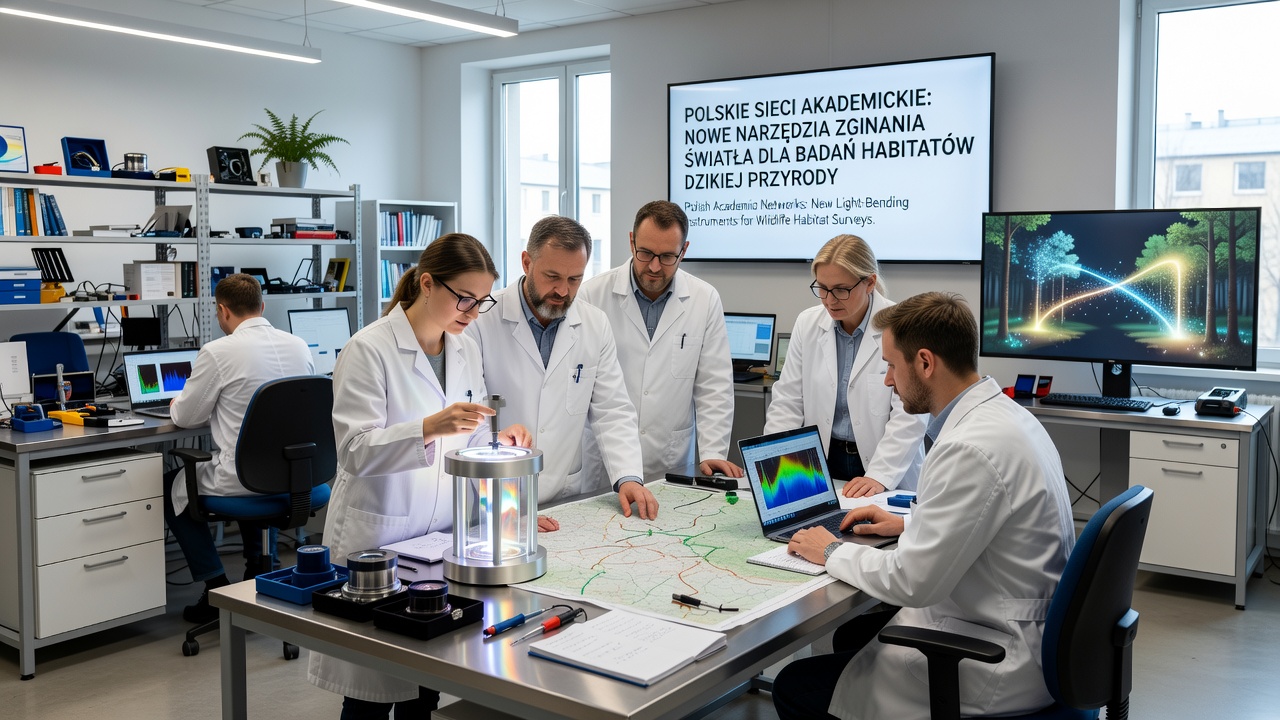
Training programs at partner institutions prepare students and technicians to operate and maintain the equipment, and curricula combine theoretical optics with practical field exercises. Graduates often move into roles at environmental agencies or continue research within the same networks, which sustains knowledge transfer across successive project cycles. Workshops held in 2025 established standardized procedures for prism alignment that now appear in published protocols available to collaborating teams.
Applications in Habitat Monitoring
Field deployments in the Bialowieza Forest and other protected zones have collected datasets on canopy structure and ground-level features that complement satellite imagery, and analysts combine these sources to produce comprehensive habitat assessments. Light-bending instruments allow measurements at night or in low-visibility conditions, which expands the temporal coverage of surveys and captures activity patterns of nocturnal species. European Environment Agency reports indicate that such optical methods contribute to broader biodiversity monitoring frameworks used across member states.
Additional trials explore applications in wetland environments, where light redirection helps penetrate surface vegetation to assess water depth and plant distribution. Partnerships with international research groups provide comparative datasets from regions with similar ecological challenges, and these exchanges refine algorithms that interpret optical signals under varying atmospheric conditions.
Future Milestones and Data Integration
Planned upgrades scheduled for late 2026 include enhanced sensor fusion that merges optical readings with acoustic and thermal data, and early simulations suggest improved species identification accuracy. Network coordinators track progress through shared performance metrics that emphasize repeatability and minimal habitat disturbance. Academic publications emerging from these projects document both hardware specifications and survey outcomes, creating a growing reference library for other research communities.
According to European Environment Agency summaries, optical monitoring tools form part of evolving strategies that support evidence-based conservation planning. Parallel work at institutions outside Europe, including studies referenced by Australian government environmental reports, explores comparable light-manipulation techniques for remote ecosystems, which offers further points of comparison for Polish teams.
Conclusion
Polish academic networks continue to refine light-bending instruments that serve wildlife habitat surveys, and the coordinated approach across optics and ecology groups produces measurable advances in data collection methods. Ongoing trials and training initiatives maintain momentum toward expanded deployment, while integration with existing monitoring frameworks supports broader environmental assessment goals. Observers following these developments can track outcomes through published results and scheduled field activities that extend into 2027.