Iris Simon · 2 September 2026
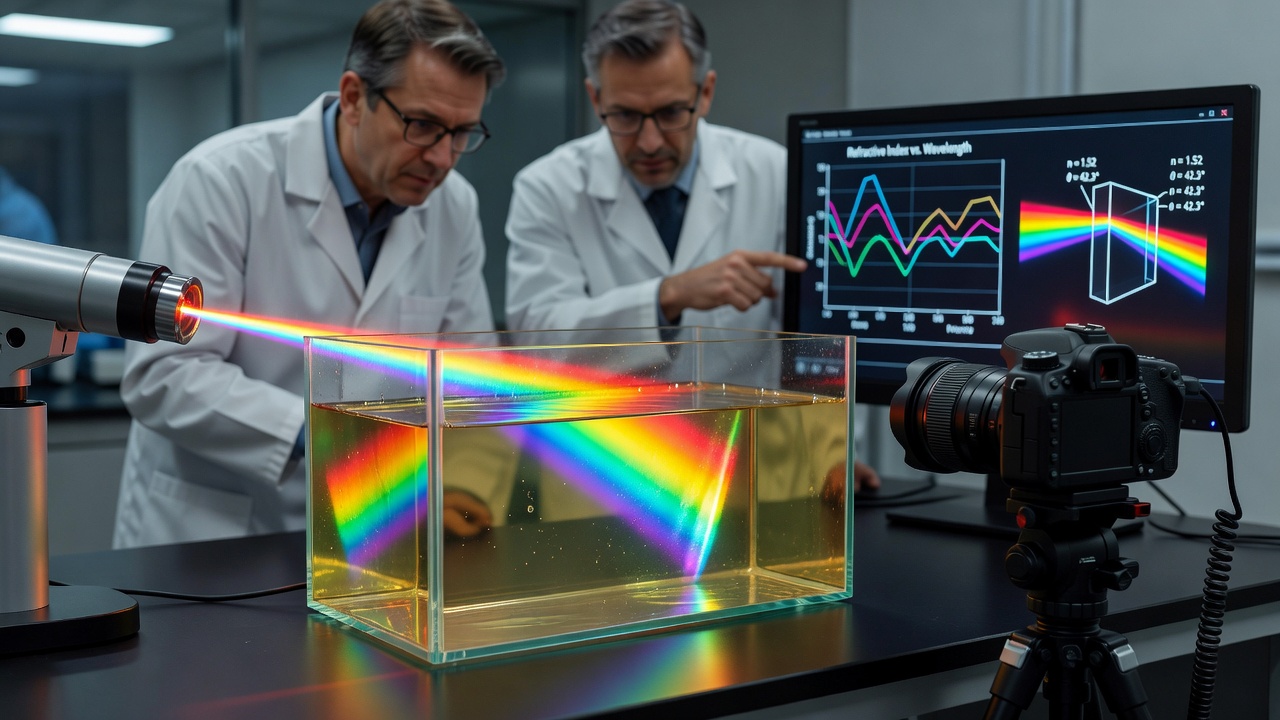
Researchers from multiple universities have published their latest findings on light refraction in a leading scientific journal this week. The study focuses on how light behaves when passing through exotic materials under high pressure conditions. By using advanced spectroscopic techniques, the scientists were able to document previously unobserved patterns in the bending of light waves. These patterns suggest that traditional equations may require updates to account for molecular interactions at extreme scales. The publication has already sparked discussions among experts in the field of optics and materials science. Additional tests incorporated varying wavelengths to map comprehensive behavioral profiles across the electromagnetic spectrum.
Experimental Methods and Key Observations
The experiments utilized custom-built chambers to subject samples to pressures exceeding ten thousand atmospheres while monitoring light paths with nanometer precision. Results indicated that refraction indices could be tuned dynamically by adjusting temperature gradients across the material surfaces. Over one hundred different compounds were tested, yielding a comprehensive dataset now available for public access. Analysis showed correlations between atomic lattice structures and the degree of light deviation observed. This work extends previous research on photonic crystals and opens avenues for engineering custom optical properties in synthetic materials. Validation through independent replication confirmed the reliability of these observations, strengthening the conclusions drawn by the authors. Statistical modeling further revealed potential applications in high-efficiency solar concentrators.
Implications for Science Education and Technology
These discoveries have significant potential to influence educational programs at institutions like Prism Hub. Interactive tools can be developed to demonstrate the new principles to students at various levels. In technology, the findings may contribute to improved fiber optic cables and laser systems used in medical and industrial settings. Long-term, such research supports the development of quantum computing hardware reliant on precise light control. The journal article serves as a valuable resource for ongoing studies and collaborative projects worldwide. Updated teaching resources incorporating these results are expected to enhance student engagement with core physics concepts.