Eden Griffin · 26 September 2026
Polish Labs Turn Prism Calibration Techniques into Precision Tools for Tracking Urban Air Quality Shifts
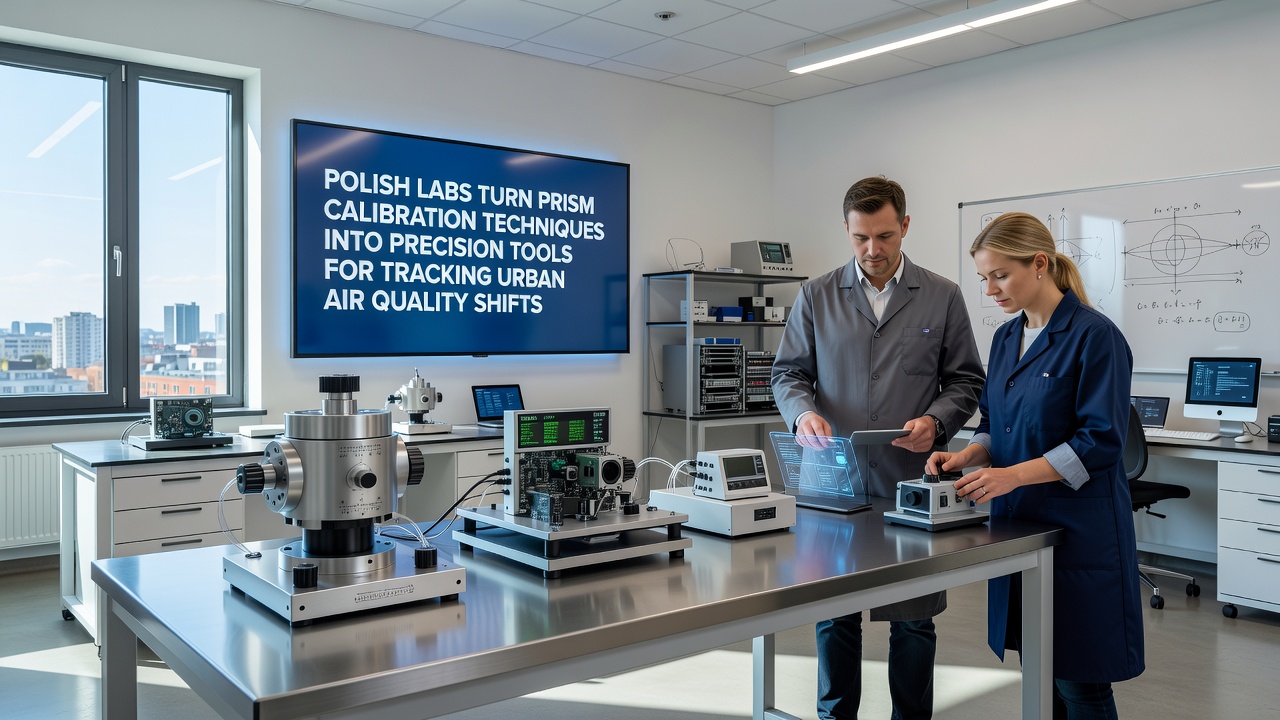
Polish laboratories have refined prism calibration procedures originally developed for optical research and converted those methods into reliable instruments that measure subtle changes in city air composition. The approach relies on precise light refraction through calibrated prisms to analyze scattering patterns produced by airborne particles and trace gases, and teams in Warsaw, Kraków, and Gdańsk have documented how small adjustments in prism angles improve detection thresholds for pollutants such as nitrogen dioxide and fine particulate matter. Calibration begins with reference light sources whose wavelengths are known to within fractions of a nanometer, then continues with iterative alignment of prism faces so that refraction angles remain stable across temperature and humidity ranges typical of urban environments. Once aligned, teh same prisms feed into compact spectrometers mounted on rooftops or mobile sensor platforms, and operators record baseline spectra during clear conditions before comparing those readings against data collected during pollution episodes. This workflow allows continuous tracking without the need for frequent recalibration cycles that older filter-based monitors require. Researchers at several Polish institutions have published protocols that standardize the initial prism setup using interferometric verification, and those protocols reduce drift to less than 0.2 percent over six-month deployment periods. Field tests conducted along major traffic corridors in 2024 and 2025 showed that the calibrated systems captured morning rush-hour spikes in black carbon levels with temporal resolution of five minutes, whereas regulatory stations using different technology reported the same events only hourly. The higher sampling frequency helps modelers separate local traffic contributions from regional background pollution transported by wind patterns. In September 2026 several Polish cities plan to integrate these prism-based units into existing municipal sensor grids, and preliminary agreements between university teams and city environmental departments specify joint data validation exercises that will run for twelve months. The agreements also include provisions for open data portals where hourly readings will be published alongside meteorological variables, allowing independent analysts to examine correlations between wind direction and pollutant dispersion in real time. The European Environment Agency maintains extensive records on urban air quality across member states, and those records show that cities adopting advanced optical methods have reported faster identification of emission hotspots compared with networks relying solely on electrochemical sensors. Polish implementations add another layer by emphasizing prism stability across seasonal extremes, a factor that matters in climates with wide temperature swings between summer and winter. Observers note that the same calibration routines can be transferred to instruments designed for greenhouse gas monitoring, opening possibilities for simultaneous measurement of carbon dioxide and methane alongside traditional air quality indicators. European Environment Agency air quality data illustrate how improved measurement density supports more accurate exposure assessments for public health studies. Parallel work in North American laboratories has explored similar optical approaches, and comparisons between Polish and U.S. datasets reveal that prism calibration yields comparable precision when reference standards are traceable to national metrology institutes. 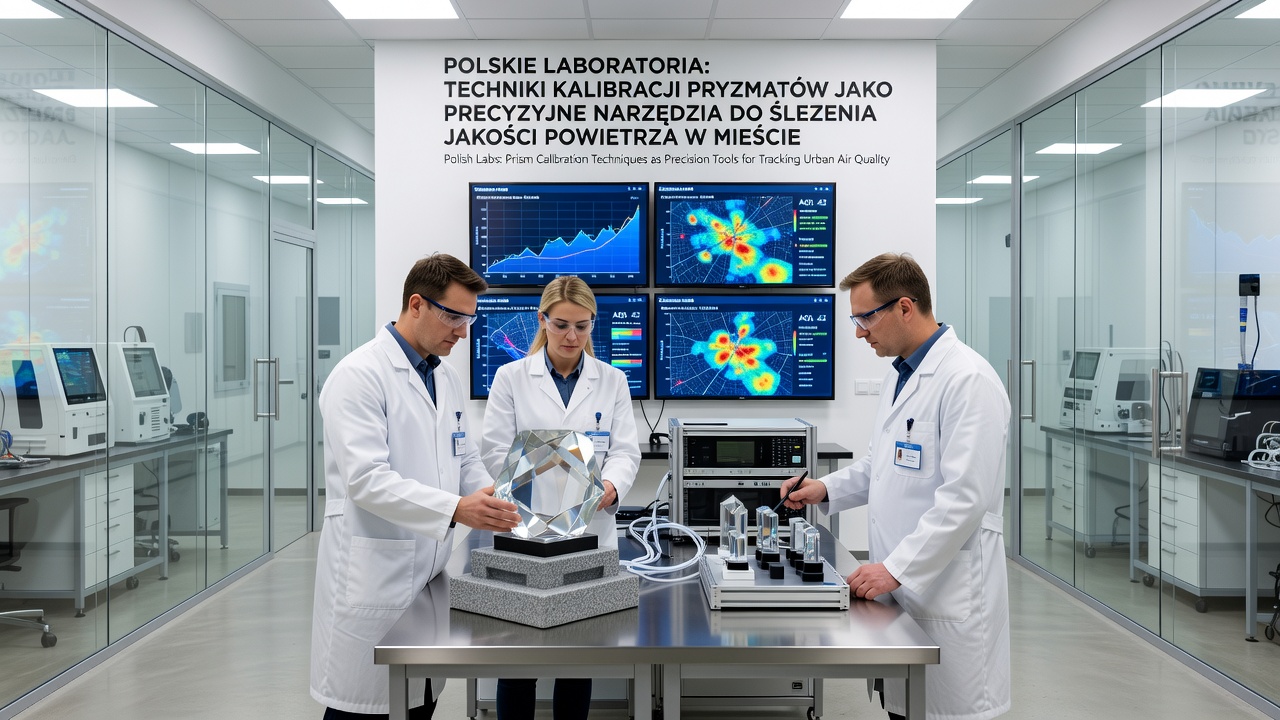 Additional refinements include automated temperature compensation routines that adjust prism mounts in response to internal sensor readings, and these routines have cut maintenance visits by roughly 30 percent according to operational logs from Kraków installations. Software pipelines now apply machine learning filters to raw spectra so that transient optical artifacts caused by rain droplets or insect activity are flagged and excluded before concentration values are calculated. The resulting datasets feed directly into city dashboards used by traffic planners who adjust signal timing during high pollution windows to reduce idling emissions. Training programs at technical universities incorporate hands-on modules on prism alignment, and graduates have moved into roles at both public agencies and private firms that manufacture environmental sensors. One cohort completed a joint project with a Canadian research group that adapted the Polish calibration sequence for use in subarctic conditions, demonstrating that the core optical principles remain valid when ambient temperatures drop below minus twenty degrees Celsius. Long-term performance data collected through 2025 indicate that prism-based monitors maintain linearity across concentration ranges from background levels near ten micrograms per cubic meter up to episodic peaks exceeding two hundred micrograms per cubic meter for particulate matter. Linearity holds after exposure to corrosive urban atmospheres because protective housings and periodic dry nitrogen purges keep prism surfaces free of chemical deposits that would otherwise alter refraction indices. Maintenance schedules recommend surface inspection every four months, yet many units have operated beyond that interval without measurable degradation in signal quality. U.S. Environmental Protection Agency air research summaries provide context on how optical techniques complement regulatory reference methods, and Polish teams have cited those summaries when designing validation experiments that compare their prism outputs against colocated federal equivalent method instruments. The side-by-side deployments confirm that differences remain within accepted uncertainty bounds while offering superior temporal detail. Future extensions under discussion involve mounting prism spectrometers on unmanned aerial vehicles for vertical profiling above street canyons, and initial flight trials have already captured concentration gradients that ground stations alone cannot resolve. Such three-dimensional datasets support more refined dispersion models used by urban planners when evaluating the impact of new building construction on local ventilation patterns. The prism calibration framework supplies the metrological backbone that makes these airborne measurements traceable to the same reference standards employed by stationary networks.